Driving Change Through Advocacy
Empowering Voices, Driving Policy for Better MG Care
Our advocacy campaigns focus on amplifying the voices of the Myasthenia Gravis community and driving policies that ensure better access to care and support. Explore our ongoing efforts and learn how you can join us.


Advocacy in Action: Championing Change for Myasthenia Gravis
EXPERT INSIGHTS
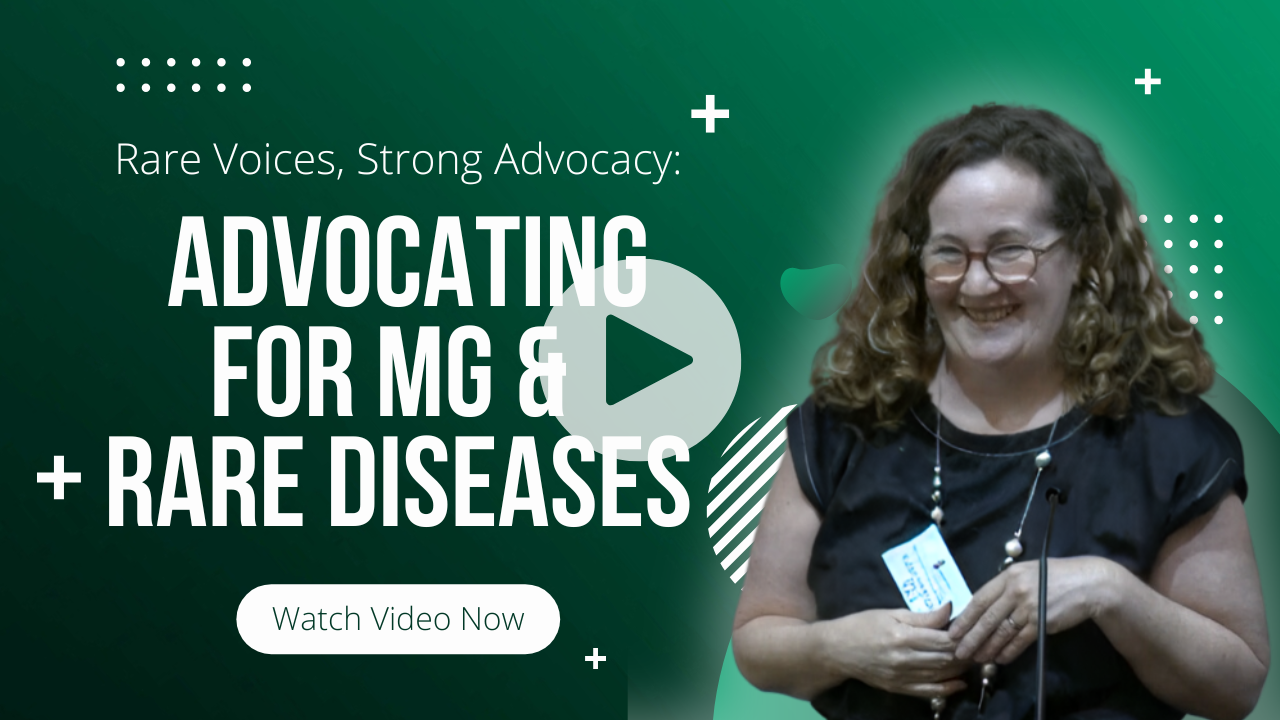
Advocating for Rare Diseases: A Talk by Louise Healy
Louise Healy, Education and Advocacy Manager at Rare Voices Australia (RVA), shares her invaluable insights on advocating for rare diseases. With over a decade of experience and a personal connection to rare conditions, Louise has led successful campaigns for better access to treatments and support programs.
At the 4th National Patient-Focused Myasthenia Gravis Conference, Louise highlighted the power of advocacy in driving change for the MG and rare disease communities.
RAISING AWARENESS
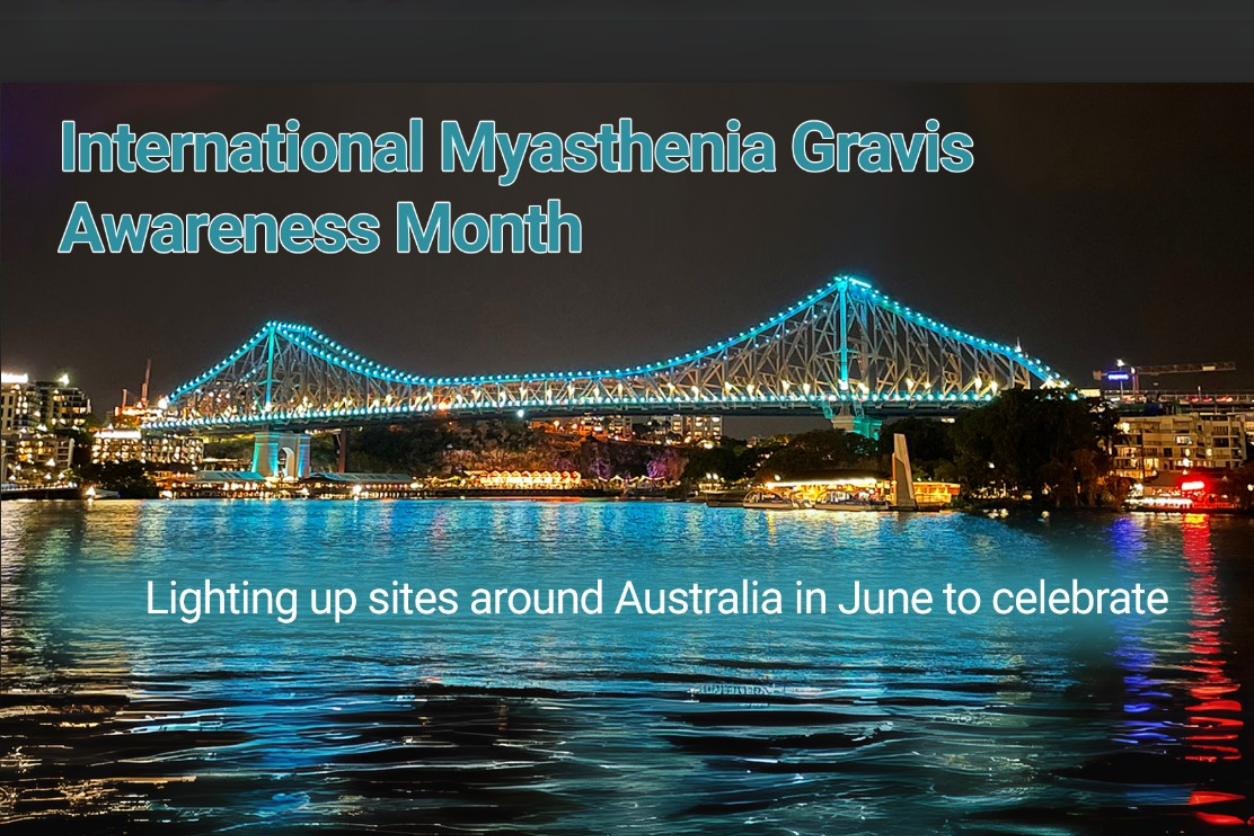
Uniting for MG Awareness Month
Each June, we come together to raise awareness about Myasthenia Gravis (MG), amplifying patient voices, educating the public, and advocating for improved understanding and care. Through storytelling, outreach, and community engagement, we strive to highlight the challenges faced by those living with MG.

ART FOR ADVOCACY
Oh-MG Art Exhibition: Creativity for a Cause
The Oh-MG Art Exhibition, curated by Chloe Wigg, showcases the intersection of art and advocacy for Myasthenia Gravis. Featuring community contributions and personal stories, this unique exhibition raises awareness while celebrating artistic expression. The exhibition will run from May 22 to June 14, 2025, at Logan Art Gallery.
ENSURING ACCESS TO CARE
Improving Access to Life-Changing MG Treatments
We are actively working to improve access to advanced MG treatments, including government funding, PBS (Pharmaceutical Benefits Scheme) coverage, and policy reforms for better access to Therapeutic Plasma Exchange (TPE). Advocacy efforts are crucial in ensuring every MG patient receives the care they need.

HEALTH POLICY REFORM
Partnering for Medical Advocacy
In collaboration with Neurological Alliance Australia (NAA), we are working toward meaningful reforms in healthcare policy. Our focus includes NDIS support, My Aged Care improvements, and Medicare reform to enhance accessibility and quality of care for MG patients.

Register for MAA’s News Feed
Shaping the Future of MG Care
Access the latest policy developments, advocacy efforts, and healthcare funding updates related to Myasthenia Gravis. Stay informed and help create change by joining the MAA News Feed.
Stay Updated on Regulatory Developments
Understanding Regulatory Shifts in MG Treatment and Care
Access the latest updates on policies and regulations affecting the Myasthenia Gravis community. Stay informed about legislative changes and collaborative efforts to ensure better care and support for individuals with MG.

REGULATORY PROGRESS
Championing Fair NDIS Access for MG Patients
Improving NDIS Support for MG Patients
Advocating for fair and equitable support for individuals with Myasthenia Gravis (MG) means pushing for updates to NDIS eligibility criteria and support packages. We are driving essential reforms to ensure MG patients receive the assistance they need to navigate daily challenges and long-term care.


Expanding Access to MG Treatments Through the PBS
Recent applications have been submitted for the inclusion of advanced MG treatments, such as complement inhibitors and FcRN inhibitors, in the Pharmaceutical Benefits Scheme (PBS). If approved, these additions would enhance affordability and accessibility for patients across Australia.
Expanding Telehealth Access for Rural MG Patients
Access to specialist care is a challenge for individuals with Myasthenia Gravis (MG) living in rural and remote areas. New regulations are paving the way for expanded telehealth services, ensuring MG patients receive timely consultations, treatment guidance, and specialist support, regardless of location.

Collaborate with Us for Meaningful Change
Unite for Impact: Partner in Advocacy & Policy Change
At MAA, we believe that impactful change happens through collaboration. Partner with us to co-create policies, support advocacy campaigns, and drive initiatives that make a difference for the MG community.


Be a Voice for MG
Partner with Us to Elevate MG Awareness
Be a voice for change by supporting our advocacy initiatives. Whether it's securing funding, improving treatment access, or increasing MG awareness, your collaboration can help drive critical improvements in the lives of those affected.

MEANINGFUL POLICY CHANGE
Shaping MG Policies for a Better Future
Join us in developing policies that directly impact the MG community. From improving healthcare access to ensuring fair disability support, your insights can drive meaningful change. Work alongside experts to create solutions that make a difference.

FUNDING FOR IMPACT
Empowering Research and Treatment Advancements
Collaborate with us to secure and allocate funding for vital MG research, treatment innovations, and community support initiatives. Your contribution can shape the future of MG care.
Advancing Research for Better MG Care
Together, We Drive Meaningful Change
Research is at the heart of improving Myasthenia Gravis (MG) care and shaping policies that ensure better outcomes for the community. The Myasthenia Alliance Australia (MAA) is committed to fostering and supporting groundbreaking studies that directly impact clinical practice, treatment advancements, and patient quality of life.

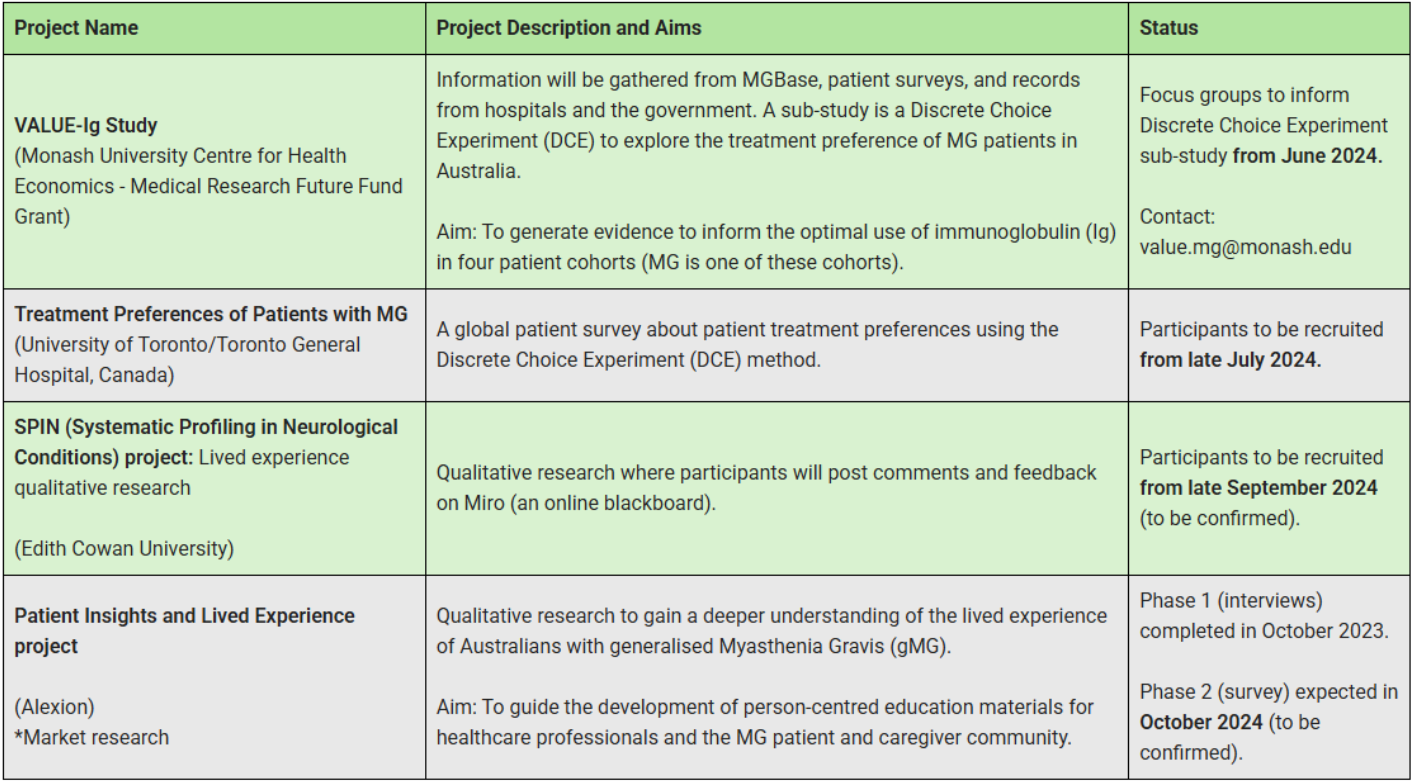
Key Research Initiatives
By championing MG research, we aim to ensure that patient voices and real-world needs remain at the forefront of medical advancements and policy discussions.
Current and Upcoming Research
Past Research
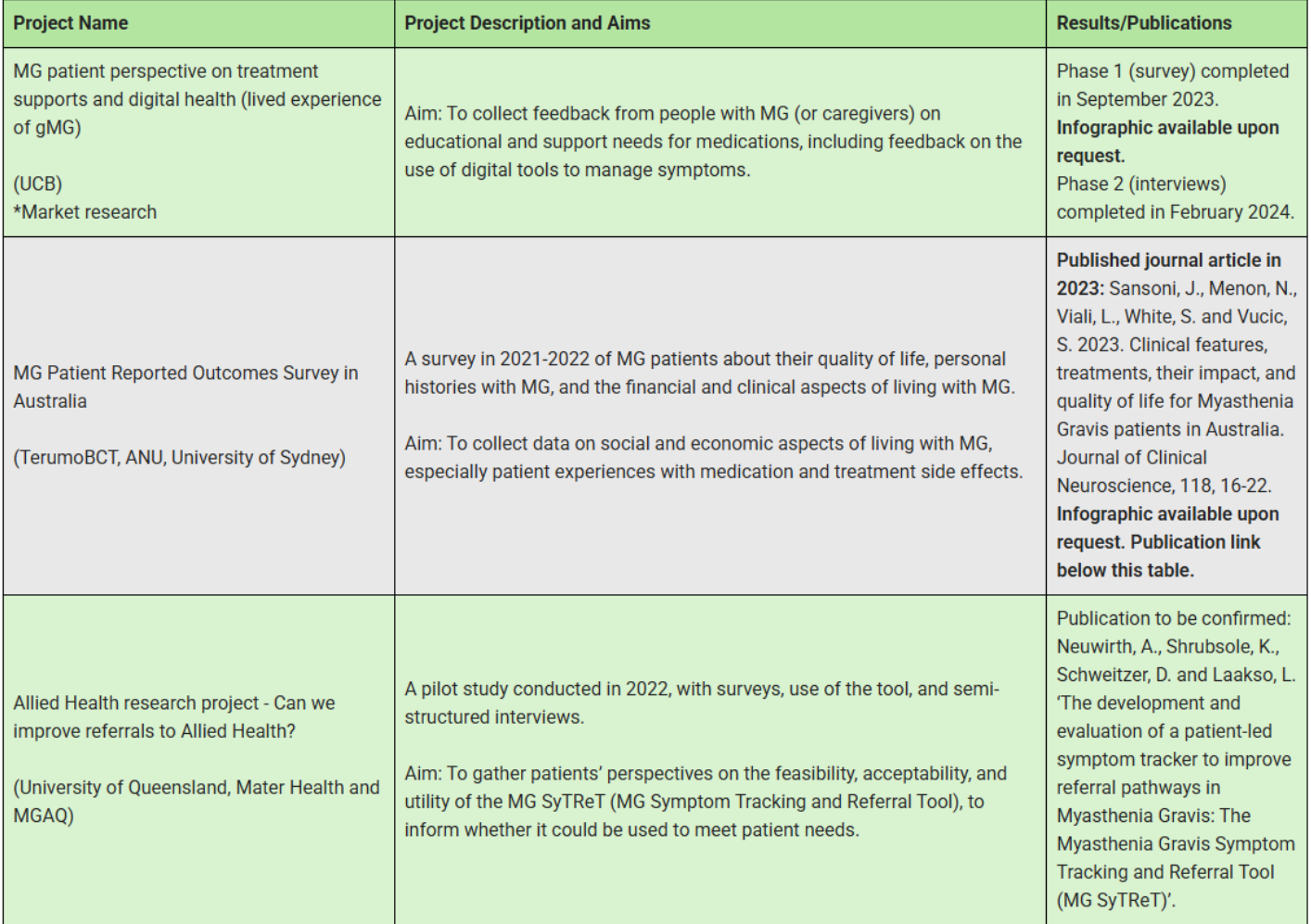
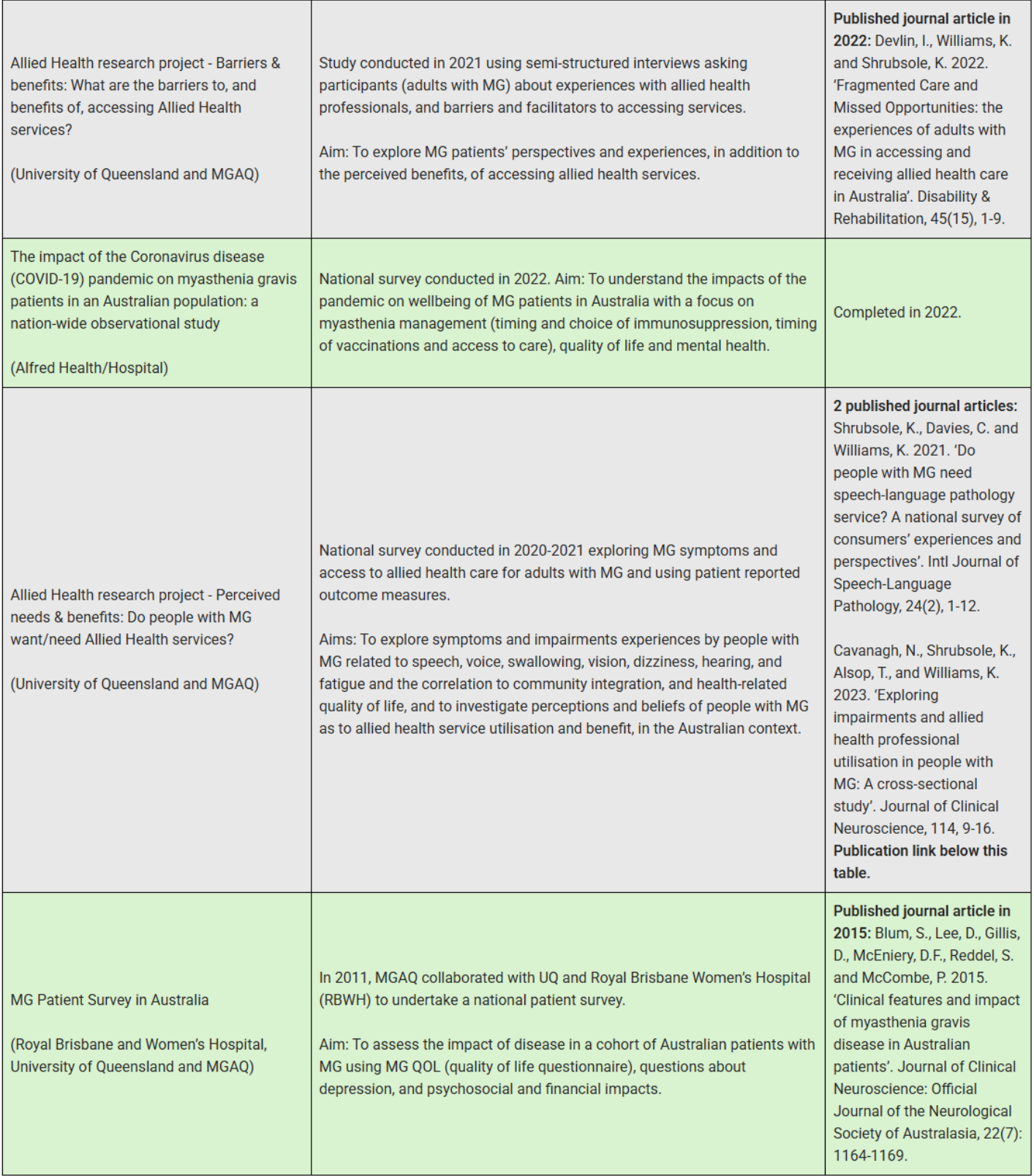
Clinical features, treatments, their impact, and Quality of Life for Myasthenia Gravis: This publication, in Journal of Clinical Neurosciences, Volume 118,(2023), Pages 16-22.
The Patient Reported Outcomes study, provides an update on the experience of Myasthenia Gravis (MG) patients in Australia Patients were recruited through the Myasthenia Alliance Australia and completed an online survey that included questions related to demographics, clinical features, treatment side-effects and quality of life (QOL) scales.
Female and seronegative patients reported a significantly greater symptom load, earlier disease onset, longer time to diagnosis, more MG exacerbations, treatment side-effects, and poorer QOL. For exacerbation management there was a higher rate of oral corticosteroid use, a lower use of Intravenous Immunoglobulin (IVIg) and Therapeutic Plasma Exchange (TPE).
Common treatment side-effects reported by 57–85% of patients and included fatigue, weight gain, a decrease in the ability to fight infections, gastrointestinal symptoms, and muscle weakness. The impact of MG on daily activities and QOL was considerable, but those who had a thymectomy reported better QOL.
The survey identified areas for potential practice improvement in MG treatments (corticosteroids, IVIg, TPE), particularly for exacerbation management, and review is recommended. Further research on gender and antibody status differentials regarding clinical features is required.
The journal article is available with free access until December 2023 and can be found here https://www.sciencedirect.com/science/article/pii/S0967586823002850.
The MAA gratefully acknowledge TerumoBCT’s significant contribution to this project and for the opportunity to work in partnership and the significant work by the authors: Janet Sansoni, Nidhi Menon, Lachlan Viali, Susan White and Steve Vucic.
Clinical features, treatments, their impact, and Quality of Life for Myasthenia Gravis: This publication, in Journal of Clinical Neurosciences, Volume 118,(2023), Pages 16-22.
This study explored how people with myasthenia gravis experience impairments in vision, dizziness, hearing, and fatigue, and how these relate to balance confidence, community participation, and health-related quality of life. In addition, the study investigated the utilisation and perception of the allied health role in managing these impairments.
Visual and hearing impairments, along with fatigue, were correlated with health-related quality of life and community participation to varying degrees, while visual impairment and dizziness were correlated with balance confidence.
Perception and utilisation of allied health professionals was variable. Common barriers to improved utilisation included the perception of clinicians having poor knowledge of myasthenia gravis, previous poor experiences with clinicians, uncertainty about the clinicians’ role, and lack of awareness that symptoms were associated with myasthenia gravis.
This journal article can be accessed by clicking the following link: https://www.sciencedirect.com/science/article/pii/S0967586823001248.
Myasthenia Gravis (MG) Australian Survey 2022:
This Australian Survey was conducted in 2022 with the aim of compiling evidence to support advocacy for people living with MG to timely and just access to appropriate health care and funding. The study surveyed MG patients about a range of factors including quality of life, financial costs and access to clinical services.
The survey results can be accessed by clicking HERE.
The MAA gratefully acknowledge Terumo Blood Cell Technologies significant contribution to this project.
Shaping the Future of MG Care
Effective healthcare policy is essential for improving treatment access, research funding, and patient outcomes in Myasthenia Gravis (MG). This section provides insights into legislative changes, advocacy efforts, and policy developments that impact the MG community.
Learn how government decisions, health policies, and research funding initiatives are shaping the future of MG care and what can be done to improve support for those living with the condition.
Stay informed with the latest policy updates below.



Register for MAA’s News Feed
Advocacy & Policy Updates for MG
Understanding the needs of people with MG is essential for effective policy change. Receive research-backed insights, funding updates, and legislative news by signing up for the MAA News Feed.