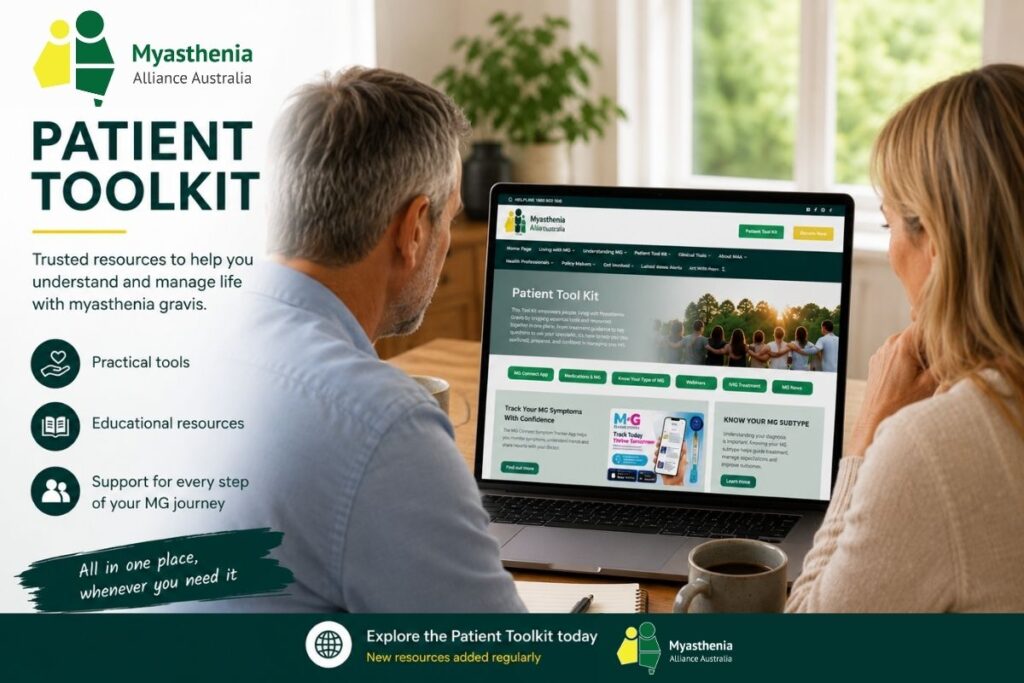
Track Your MG Symptoms With Confidence
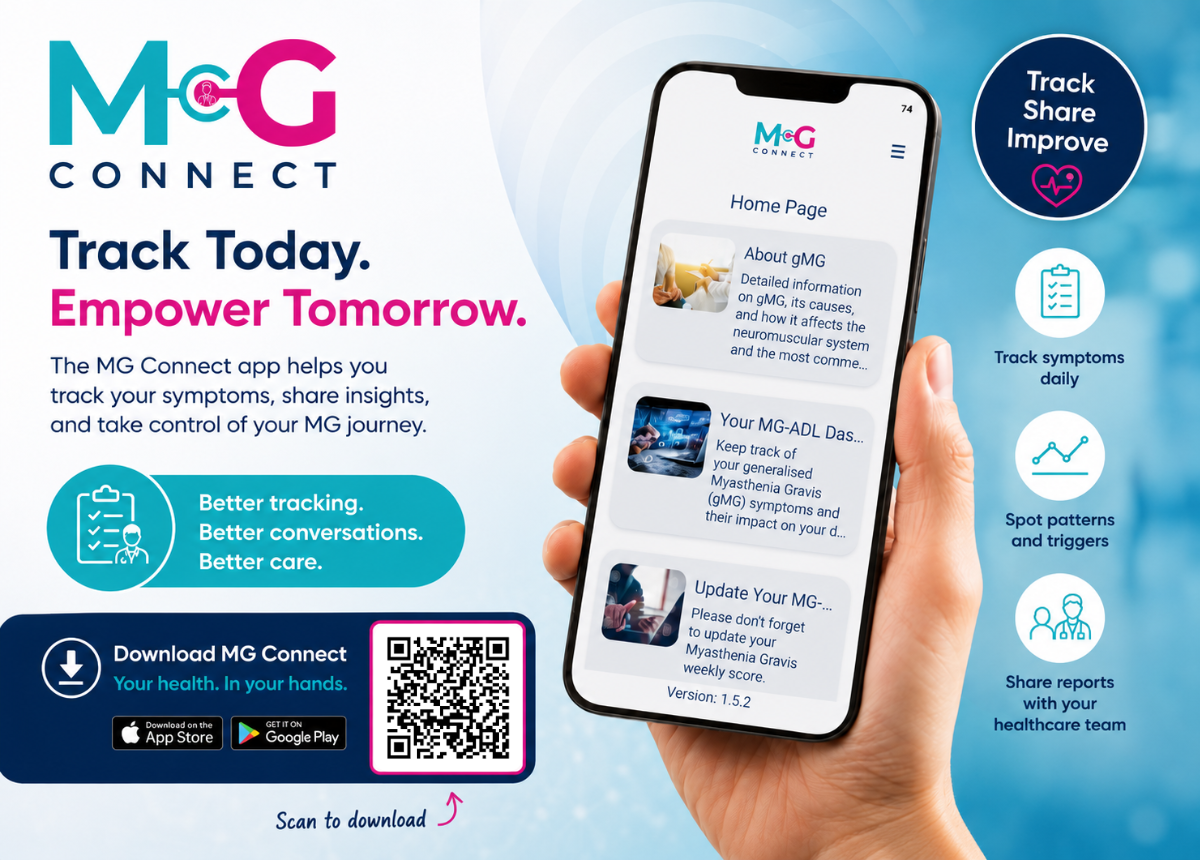
Track your MG symptoms, monitor changes over time and create reports to support more informed conversations with your healthcare team.
Developed with input from people living with myasthenia gravis, the MG Connect App makes it simple to record your weekly MG-ADL scores, identify symptom trends and prepare for appointments with your neurologist.
✔ Weekly symptom tracking
✔ Personal reminders
✔ Trend graphs
✔ Downloadable PDF reports
✔ Works offline
Looking for the Printable MG-ADL Trackers?
Already familiar with the MG-ADL scoring system? Quickly download the printable resources you need below.
Why use MG Connect?
The Myasthenia Gravis Activities of Daily Living (MG-ADL) Tracker is the most commonly used tool to measure and monitor gMG symptoms over time. It measures 8 common signs and symptoms that relate to daily life. Answering the questions based on the impact gMG has had on your quality of life over time, compiling your scores and tracking your totals can give you a visual picture that can be useful to share with your healthcare team.
Whilst the MG-ADL Tool is comprehensive, everyone’s experience can differ, so we also encourage you to use the notes section to personalise your symptom monitoring and track what matters most to you.
Track Your
Symptoms
Record how MG affects your daily life using the recognised MG-ADL assessment.
Spot
Patterns
View your symptom trends over time so you can better understand changes in your condition.
Share With Your Neurologist
Generate a PDF report to support more informed discussions during appointments.
Download in two simple ways
We have two resources to help you monitor and measure – a mobile application that you can download to your phone or a paper-based system you can download and print out below.
Option 1: Download from your phone’s app store
If you have an Apple iPhone:
- Open the App Store
- Search for MG Connect
- Tap Download or the cloud icon
- Open the app once it has finished downloading
If you have an Android or other mobile phone:
- Open the Google Play Store
- Search for MG Connect
- Tap Install
Open the app once it has finished downloading
Option 2: Use the QR code
You can also use the QR code shown here
- Open your phone’s camera
- Point it at the QR code
- Tap the link that appears on your screen
- This will take you directly to the correct app download page
- Follow the steps on your phone to install the app

Need a little extra help?
If you're new to the MG Connect App or would like step-by-step instructions, the User Guide will walk you through downloading the app, setting up your account and making the most of its features. View the MG Connect User Guide

Prefer Pen and Paper?
Track your symptoms on paper.
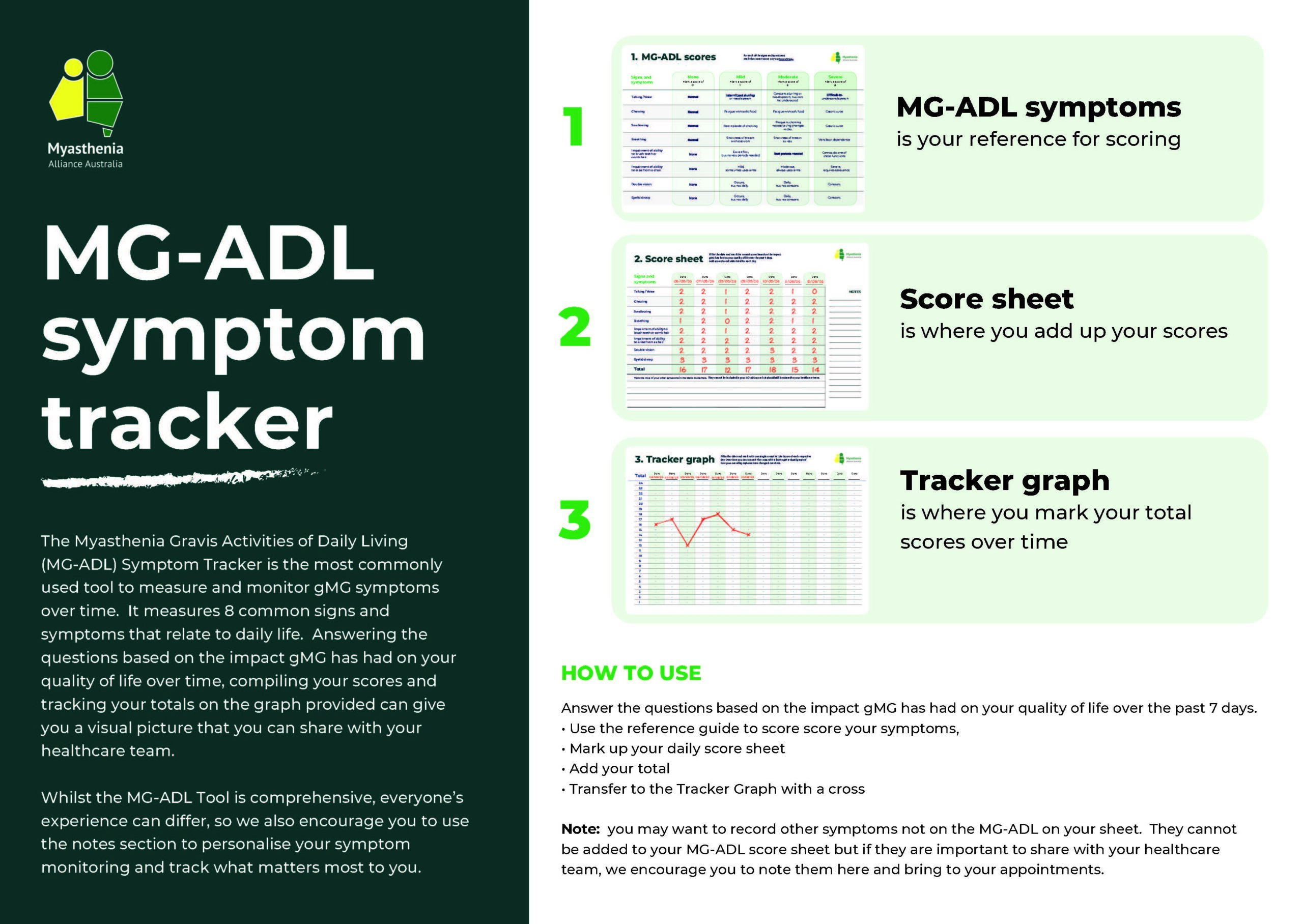
If you'd rather not use a mobile app, you can still monitor your symptoms using our printable MG-ADL Symptom Tracker. Simply download the guide below, record your weekly scores by hand, and bring it along to your appointments to help support conversations with your healthcare team.
1. MG-ADL Symptoms - is your reference for the scoring. It does not necessarily need to be printed out.
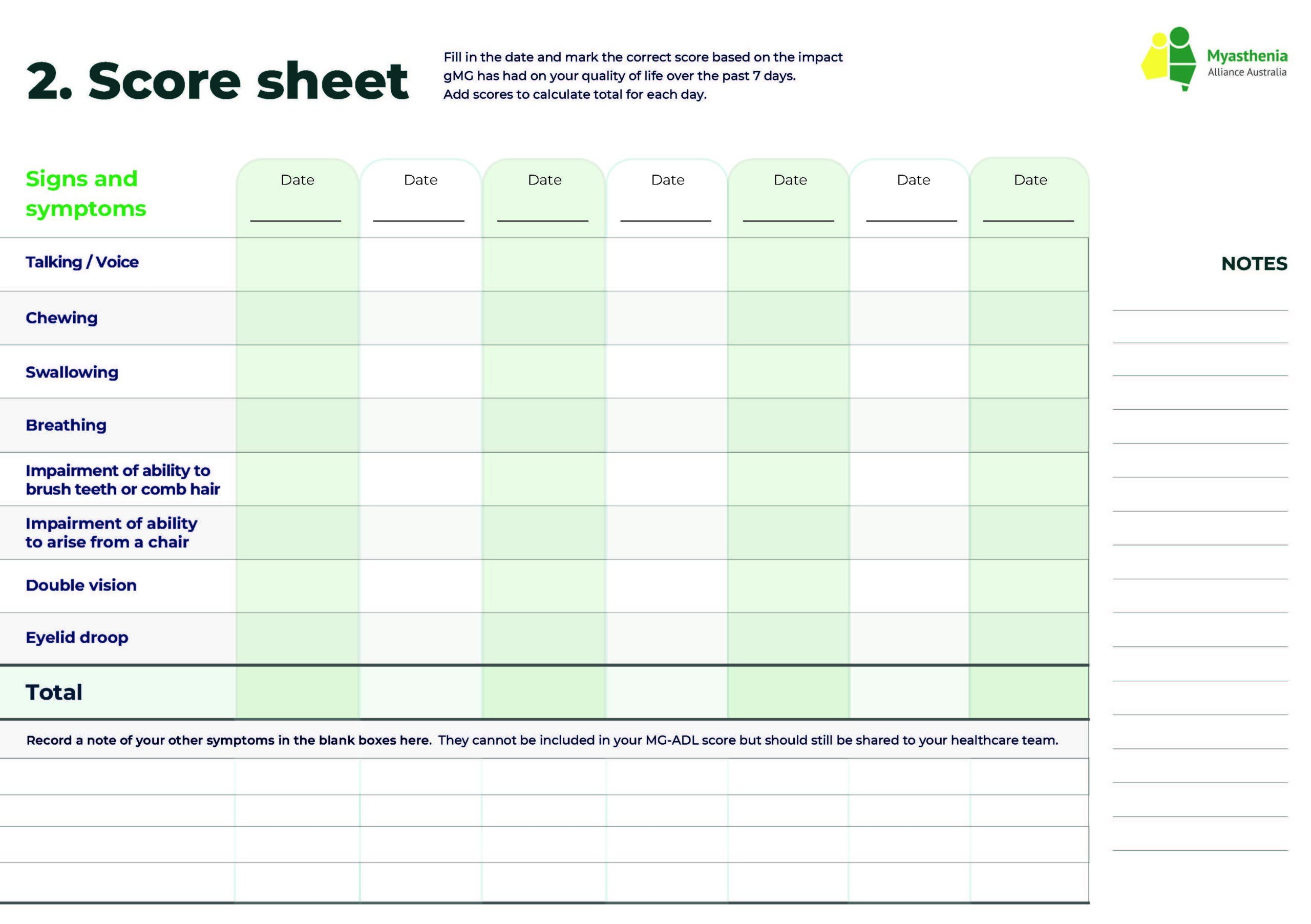
2. Score Sheet - is where you add up your scores.
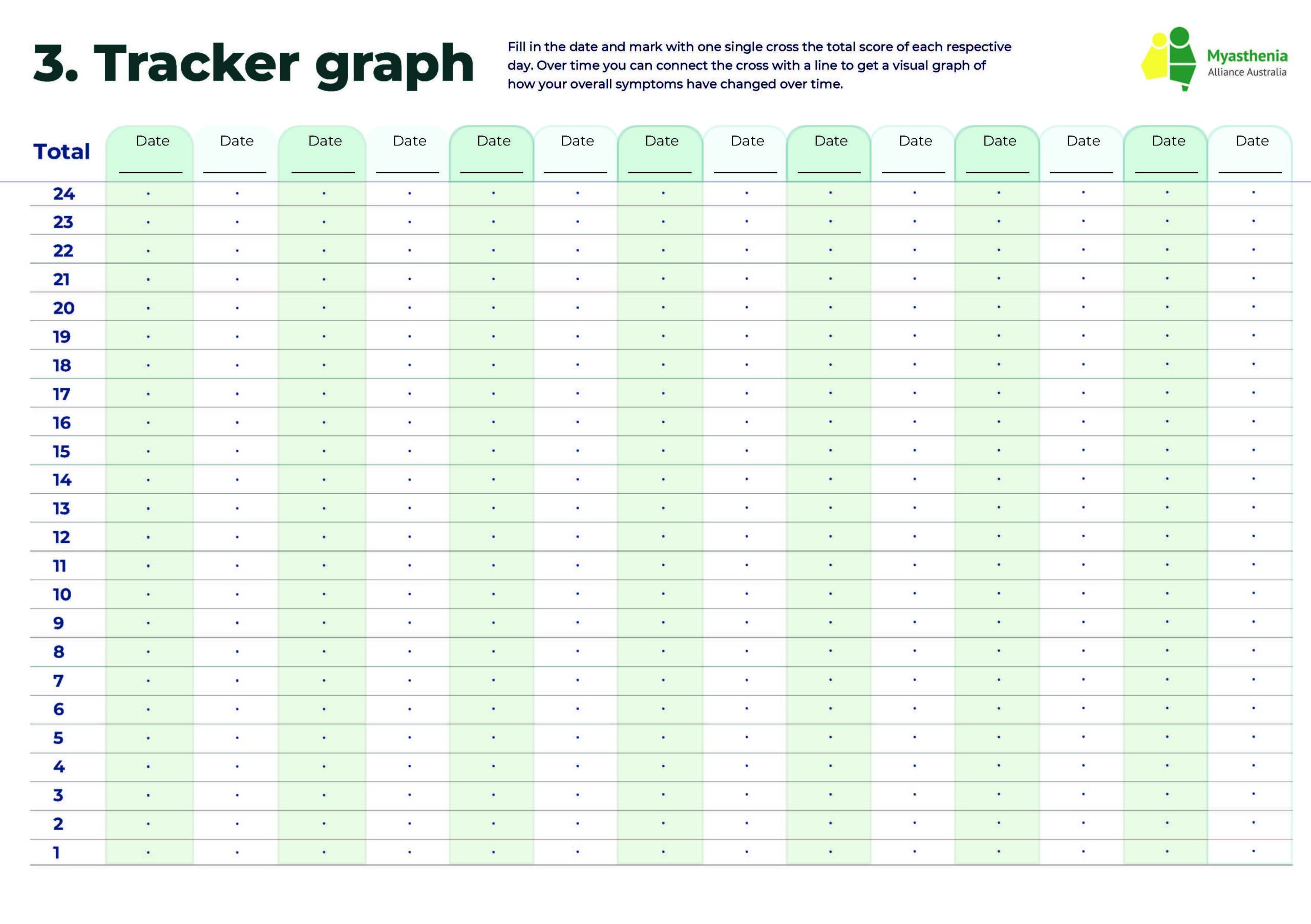
3. Tracker Graph - is where you mark your total scores over time.
Medications and MG – Drugs To Use With Caution
Understanding Drug Sensitivities in Myasthenia Gravis
Some medications can worsen MG symptoms or trigger a myasthenic crisis. It's crucial that healthcare providers are aware of these risks to ensure safe and effective treatment plans. The following resources offer guidance on drugs that should be used with caution or avoided entirely for patients living with MG.
Below you’ll find a detailed table outlining high-risk medications, common interactions, and clinical recommendations to support informed decision-making in MG care.
⚠️ Important Information for Prescribers and Patients
The following table includes a partial list of medications that may worsen Myasthenia Gravis (MG) symptoms. It is intended as a guide to support informed treatment decisions between patients and their healthcare providers.
Please note:
-
Individual responses vary. The medications listed can be used in MG patients when clinically appropriate and with careful monitoring.
-
Presence on this list does not mean a drug is strictly contraindicated.
-
Absence from this list does not guarantee a drug is safe. Always consult a specialist familiar with MG when prescribing new medications.

Additional Resources
For a more detailed list and professional guidance, visit the MGFA’s Resources for Professionals page.
📄 Prefer a printable version?
Download the MAA Trifold: Drugs That May Worsen MG Symptoms (PDF)
This easy-reference guide is designed for both patients and healthcare providers.
Know Your Type of MG
Do You Know What Type of Myasthenia You Have?
Understanding your MG subtype helps guide treatment decisions and ensures you receive the care that’s right for you. Use this printable checklist to start a conversation with your neurologist or specialist.

Know Your MG Subtype
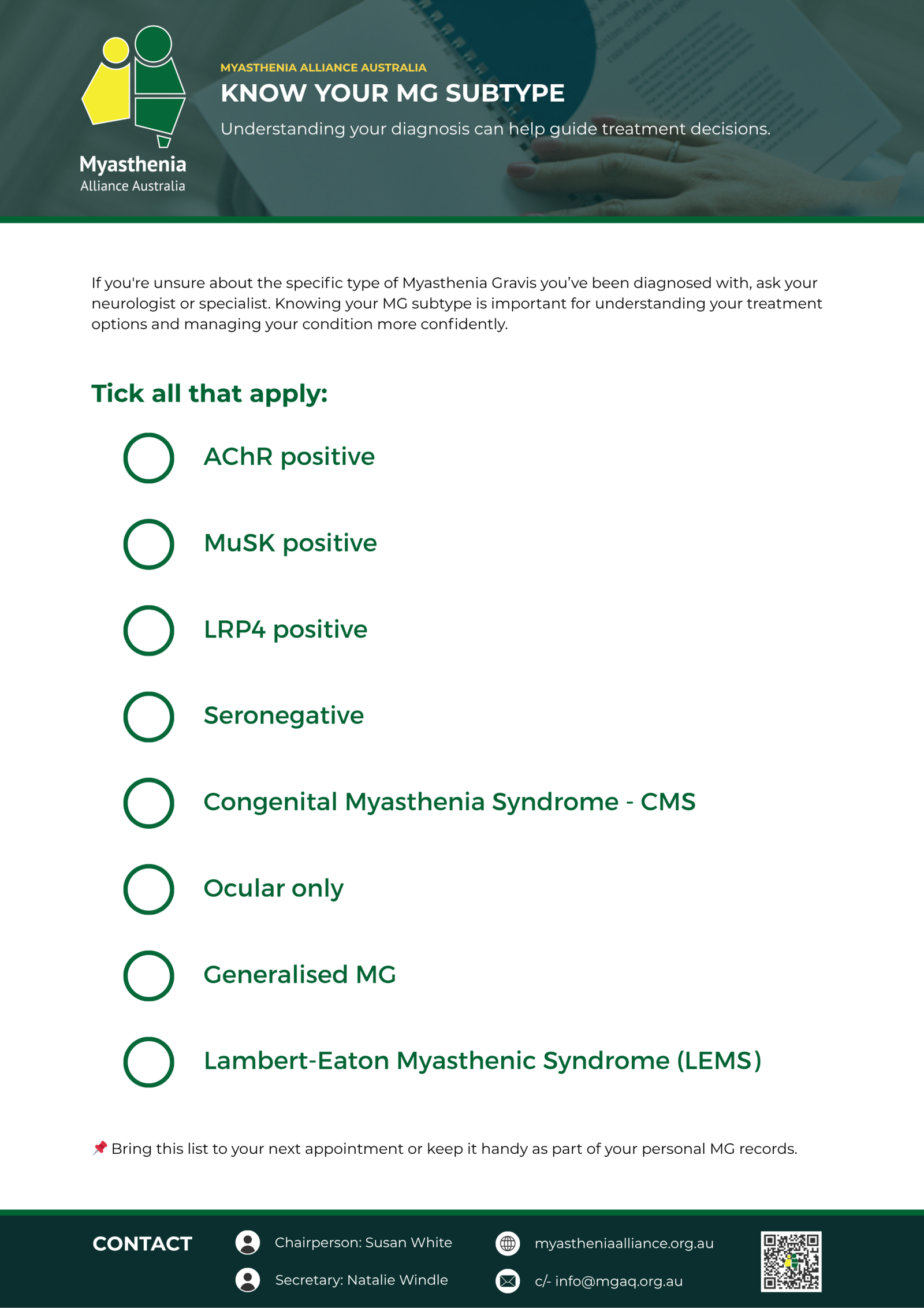
Understanding the type of Myasthenia Gravis you have is an important step in managing your condition. Whether it’s AChR positive, MuSK, LRP4, seronegative, ocular-only, generalised MG, or Congenital Myasthenia Syndrome (CMS), your specific subtype may influence which treatments are most effective.
Use this downloadable checklist to confirm your diagnosis and discuss it with your specialist. Staying informed helps you play an active role in your care.
Educational Webinars
Learn More About Managing Myasthenia Gravis
Access educational webinars covering important topics for people living with myasthenia gravis. Hear from healthcare professionals, researchers and experts, and explore information to help you better understand MG, treatment and care.



Register for MAA’s News Feed
Helpful Updates for Living Well with MG
Get practical tips, new resources, and the latest MG updates delivered straight to your inbox. Whether you’re newly diagnosed or managing your condition long-term, our news feed helps you feel informed and in control.
Accessing IVIg Treatment
Managing Myasthenic Crises: IVIg and Emergency Care
If IVIg is part of your treatment plan, knowing when and how to access it can be lifesaving. This article outlines the importance of timely intervention and what to expect from IVIg treatment. Share it with your GP, hospital team, or carers.

Understanding IVIG Treatment for MG
Intravenous immunoglobulin (IVIG) therapy plays a critical role for patients with severe or treatment-resistant myasthenia gravis. While not a long-term solution, IVIG offers rapid symptom relief during periods of intense weakness. This summary explains how IVIG works, who it’s recommended for, and what patients can expect from the treatment - including potential side effects and benefits.
Latest Updates for Living with MG
Explore the newest insights, research highlights, and personal stories to help you better understand and manage Myasthenia Gravis. This feed features relevant articles selected for their value to people living with MG, including updates on treatments, advocacy, and patient-led initiatives.
Scroll down to see what’s new and useful.